Long before supermarkets and supply chains existed, spices quietly shaped the story of the world. India’s fragrant pepper, coriander, basil, mint and chillies travelled across oceans, built trade empires and became part of daily rituals in kitchens and traditional healing systems. What made these spices precious was not just their flavor, but their purity, potency and freshness
Today, the love for spices remains unchanged, but the way we grow them is facing serious challenges. Soil fatigue, pest attacks, chemical residues and unpredictable seasons often reduce both yield and quality. At the same time, the market demand for clean, residue-free Indian spices, especially in urban homes, premium restaurants and export markets is steadily rising.
This gap between demand and quality is where hydroponics begins to tell a new story…
1. Let’s take a virtual tour into the history of spices
For centuries, spices such as pepper, coriander, basil, mint and chillies were treasured commodities. Ancient traders carried them across oceans and traditional medicine systems used them for digestion, immunity and wellness
What made spices truly valuable was their purity and potency, qualities that modern farming sometimes struggles to maintain. This is where controlled-environment cultivation becomes meaningful
2. Spices that can be grown in hydroponics
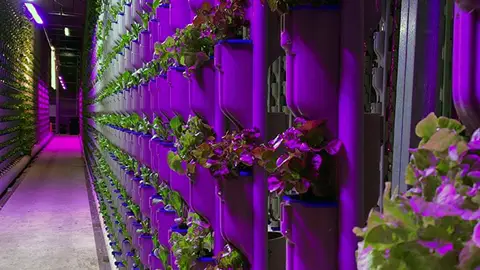
Hydroponic systems like vertical towers and Nutrient Film Technique (NFT) channels are highly suitable for many leafy and soft-stemmed spices
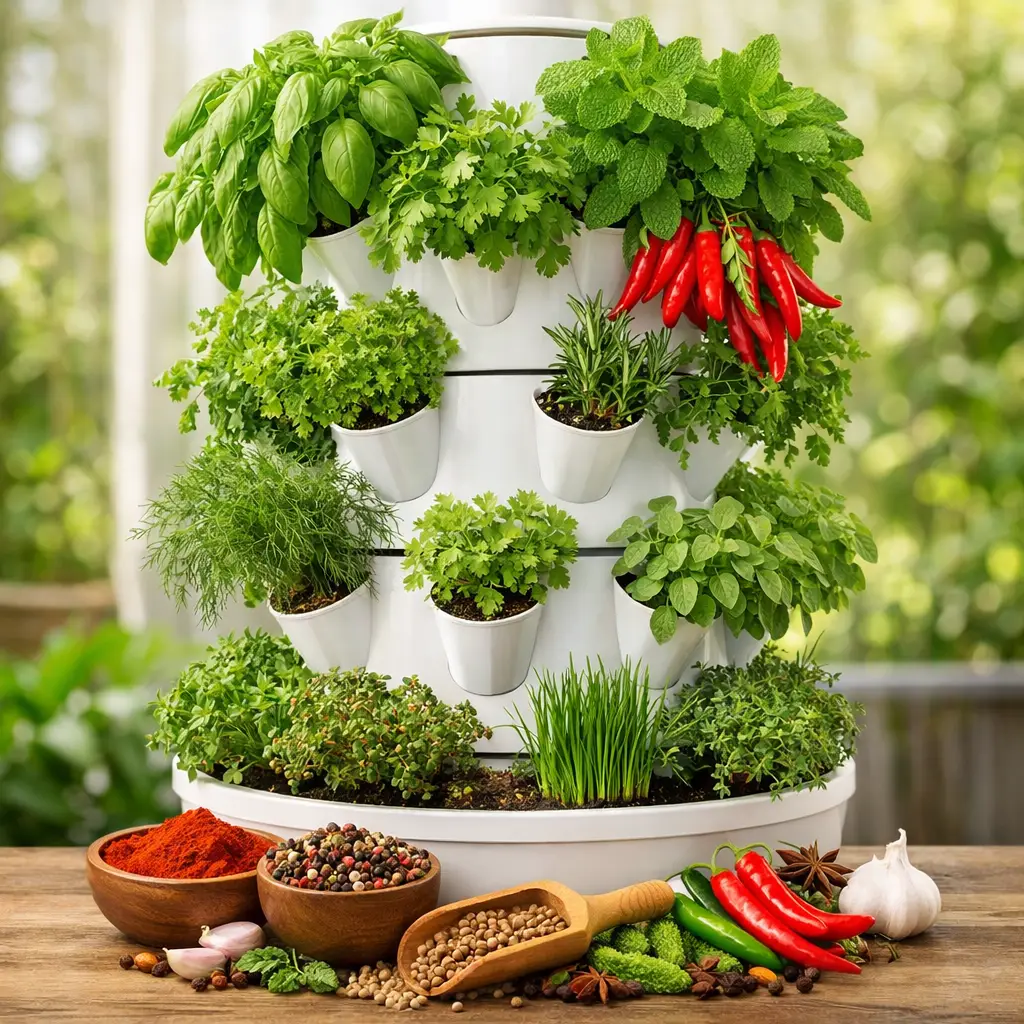
• Basil and mint for aroma and medicinal value
• Coriander and parsley for daily culinary use
• Green chillies in advanced hydroponic setups
• Oregano, thyme and rosemary for functional nutrition
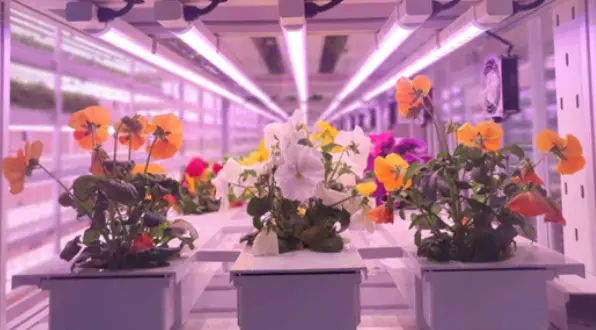
These crops thrive in precisely balanced nutrients, clean water and protected environments, leading to consistent growth and flavor
3. Challenges in soil-based spice cultivation
Traditional soil farming of spices often encounters:
• Pest and disease pressure affecting delicate leaves
• Uneven nutrient availability due to soil variability
• Chemical pesticide dependence for crop protection
• Seasonal limitations reducing year-round supply
Such factors can compromise both yield and purity
4. Market demand for spices & Potential of hydroponics catering to the demand:
India remains the largest global producer and exporter, with spice exports worth about $4.45 billion and representing a significant share of global trade
Total spice production has crossed around 12 million metric tons annually, highlighting massive domestic and export demand
India’s spice market was valued at ₹2,21,832 crore in 2025 and is projected to reach ₹5,28,985 crore by 2034, growing at a 10.14% CAGR
The domestic market alone is expected to reach ₹1.6 lakh crore within five years, supported by rising consumption and packaged-spice demand
From this, it’s strongly evident that demand for cleaner spices is not just growing. It’s accelerating across households, food processing, exports and wellness industries
Coming to the global market for spices, nearly 12% of tested spice samples. In India have failed safety or quality standards, showing rising scrutiny in global markets
Export markets like the EU are becoming strictly quality-driven, pushing producers toward safer and traceable cultivation systems
This strongly implies, future spice demand will favor clean, residue-free and traceable production rather than only high volume
With spice demand rising at 10% CAGR, traditional seasonal farming alone struggles to maintain stable supply. Hydroponics delivers continuous harvest cycles independent of soil and climate variability
Growth in spice extracts, nutraceuticals and packaged spices requires uniform, residue-free inputs conditions naturally suited to controlled hydroponic systems
As consumption expands in cities, hydroponics enables local cultivation near consumers, reducing logistics cost and post-harvest losses while improving freshness
5. A flavorful future rooted in innovation
India’s spice sector is moving from volume-driven agriculture to quality-driven, traceable and premium production
Hydroponics aligns precisely with this transition by delivering:
• Cleaner produce
• Predictable yield
• Export-ready quality
• Scalable urban farming models
In a nutshell,
Future spice demand will not just ask “How much can we grow?”
It will ask “How clean, consistent, and sustainable is what we grow?
And that is exactly where hydroponics becomes not an alternative, but a necessity
At Happhygreenz, this vision drives our work. Through thoughtfully designed hydroponic towers, NFT systems and training solutions, we help families and entrepreneurs grow pure, flavorful spices year-round, blending ancient tradition with sustainable technology for a healthier future…
Compiled & Written By
Agrowvitz Agronomist
Durga B